
Showing posts with label academia. Show all posts
Showing posts with label academia. Show all posts
Sunday, December 21, 2014
Organizing the Humanities


Friday, July 18, 2014
Visigoths at Academe's Doors?
 "If the scuttlebutt about reading is true, the Visigoths are at the door,"
warn Drs. David Joliffe and Allison Harl. An array of national surveys
and studies suggests neither high school nor college students spend
much time preparing for class, the central activity of which entails
reading assigned articles, chapters, and books. Similar reviews indicate
college students spend little or no time reading for pleasure. As major
players in general education, most of which requires substantial reading,
English department faculty are increasingly asking themselves:
What are our students reading and why?
Monday, September 30, 2013
It's Academic
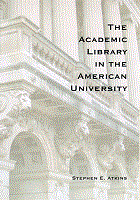 “Throughout the history of American higher education, the academic library has supported the university in its academic mission,” Dr Stephen E. Atkins writes in The Academic Library in the American University. Noting its evolution over three-and-a-half centuries, the former president of the American Library Association continues, “The academic library has become a depository of materials that support faculty and graduate student research in an almost infinite variety of disciplines.” For my part, I shall be forever grateful to the academic libraries of Brazil for that is where I found my beloved wife, a reference librarian in the humanities.
Monday, February 04, 2013
Racket Bawl

Tuesday, January 29, 2013
Revolting Academics
 Eleven leading British academic associations have issued an open letter
condemning government plans for open access publishing as a
“rushed policy” that threatens the “international standing
of British Universities and research.” Signed by the Royal Historical Society, the
Political Studies Association, and the Council for the Defence of British
Universities, among others, the critique calls open access a
“fundamental revolution” in academic life and expresses fears about the
publication of papers falling to university administrators. Academics Revolt Over Open Access
Subscribe to:
Posts (Atom)